Chasing the Bloom
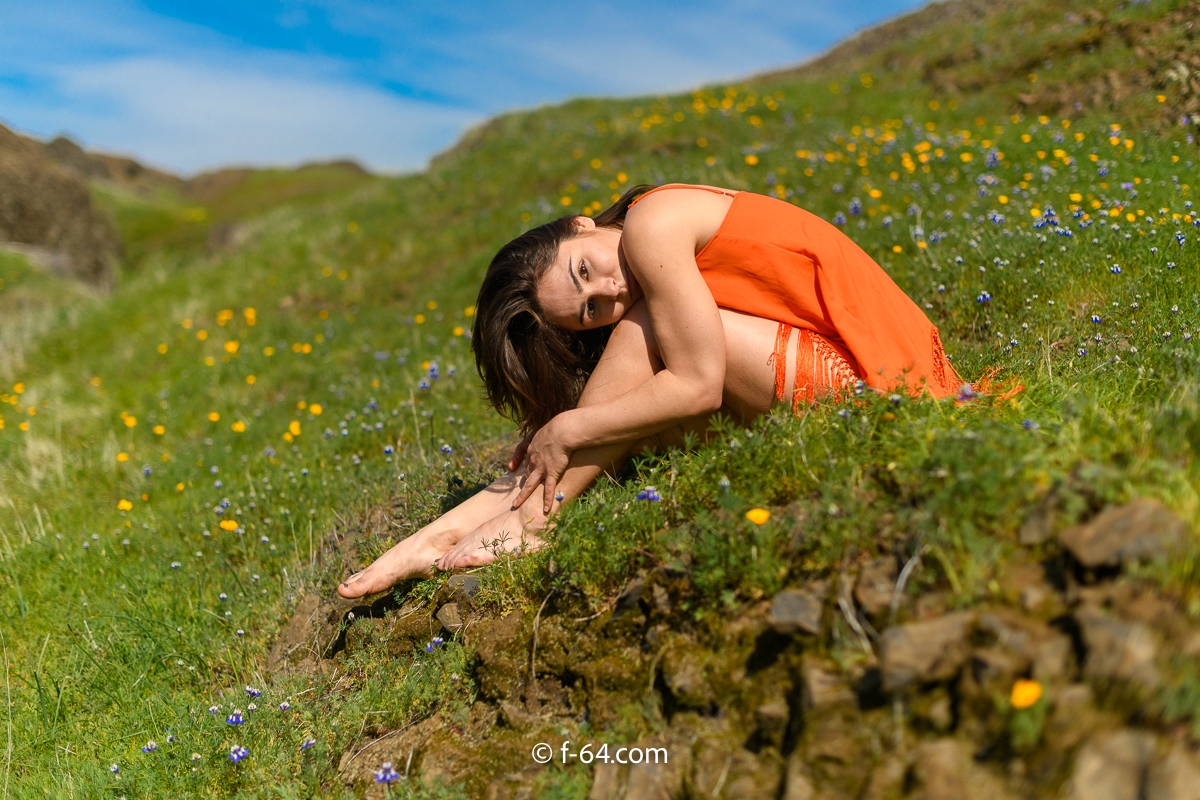
Early March is the start of the wildflower season in Northern California, and the timing is unpredictable. Some years the bloom peaks in late February. Other years it doesn’t hit until mid-March. Last spring, I started watching the Oroville hillsides in late February, driving up on weekends to check the progress. By the first week of March, the lupines were coming in thick, and the poppies were starting to open. I called my client and said, “It’s time. We have maybe a week before it peaks and fades.”
That’s the reality of outdoor boudoir photography tied to wildflowers. You can’t schedule it six months out. You pick a window, you watch the weather, and when the flowers show up, you go. This client had been flexible with her dates from the start, which is the only way these bloom sessions work.
The Drive to Oroville
Oroville is about 75 miles north of Sacramento, just over an hour on Highway 70. The drive follows the Sacramento Valley floor until you start climbing into the foothills, where the oaks give way to open grassland. That’s where the wildflowers live. The hillsides along Table Mountain are famous for their spring blooms, fields of lupine in purple and blue, California poppies in deep orange, patches of goldfields in yellow so bright they look artificial. On that first March morning, the colors were already vivid enough to see from the car.
I scouted two spots the day before the session. One was a hillside with a mix of lupine and poppies, the flowers about knee-high, with an open view of the valley below. The other was a flat meadow closer to the road with shorter flowers but better light angles for late afternoon shooting. I picked the hillside for the main session and kept the meadow as a backup in case the wind picked up on the exposed slope.
Gear for the Field
For this kind of nature boudoir session, I keep the gear minimal. The Nikkormat FT2 loaded with Kodak Portra 400 was the primary film camera. Portra’s color palette, soft greens, warm skin tones, muted yellows, is practically made for wildflower fields. I also had the Hasselblad 500C with Kodak Ektar 100, a finer-grained film with more saturated color, for the close-up shots where I wanted the flowers to punch harder against the skin.
On digital, I brought a 35mm f/1.4 and the 85mm f/1.8. The 35 was for the wide environmental shots where I wanted the whole field visible. The 85 was for tighter frames where the flowers become a wash of color in the bokeh behind the subject. At f/2, a purple lupine six feet behind someone becomes a soft violet smear. It looks like a painting.
What She Wore
My client brought a simple white slip dress, a pair of bare feet, and nothing else. Smart. Against a field of purple and orange, white stands out without competing. Anything patterned or colorful would have fought with the flowers. She also brought a woven sun hat that she wore in a few of the walking shots, which gave the images a feeling somewhere between fine art and a 1970s album cover.
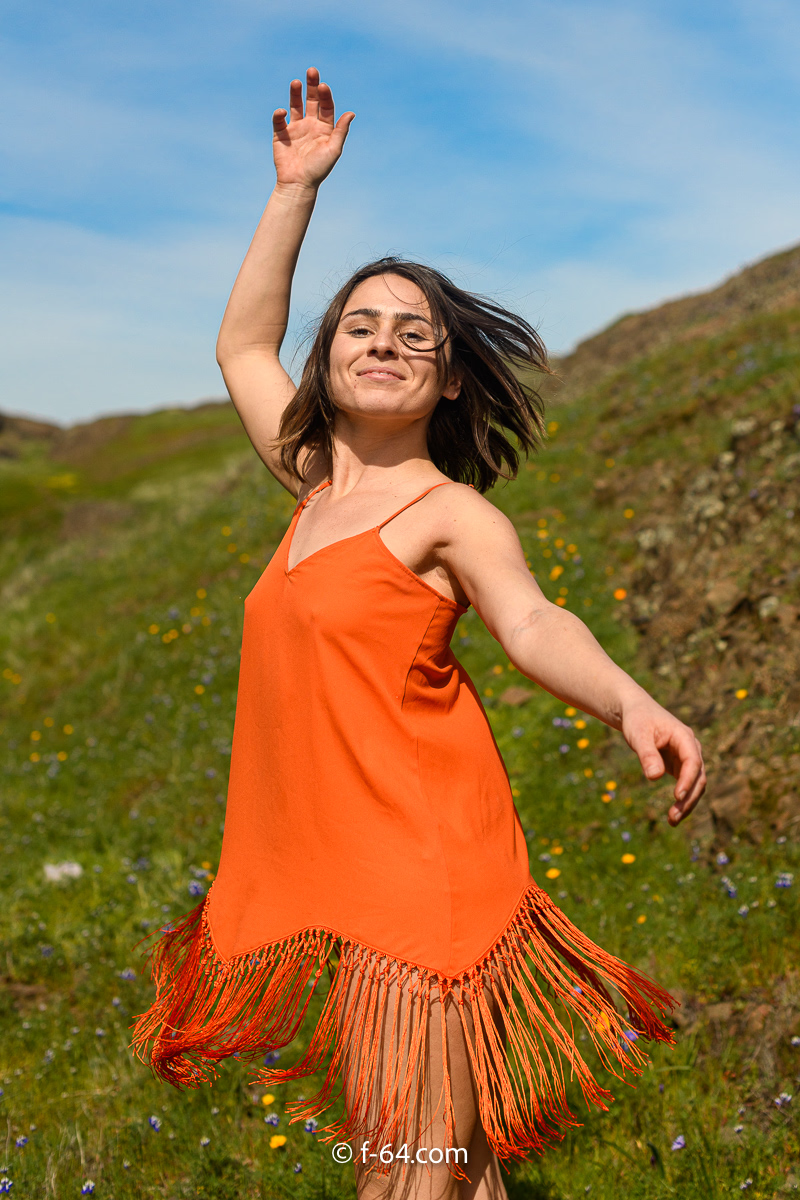
I told her to walk slowly through the flowers while I shot from a low angle. Shooting upward put the wildflowers in the foreground and the blue sky behind her, with nothing man-made in the frame. No power lines, no fences, no roads. Just a woman in a white dress in a field of color. That’s the kind of image you can’t create in a studio, no matter how much money you throw at set design.
Golden Hour in the Flowers
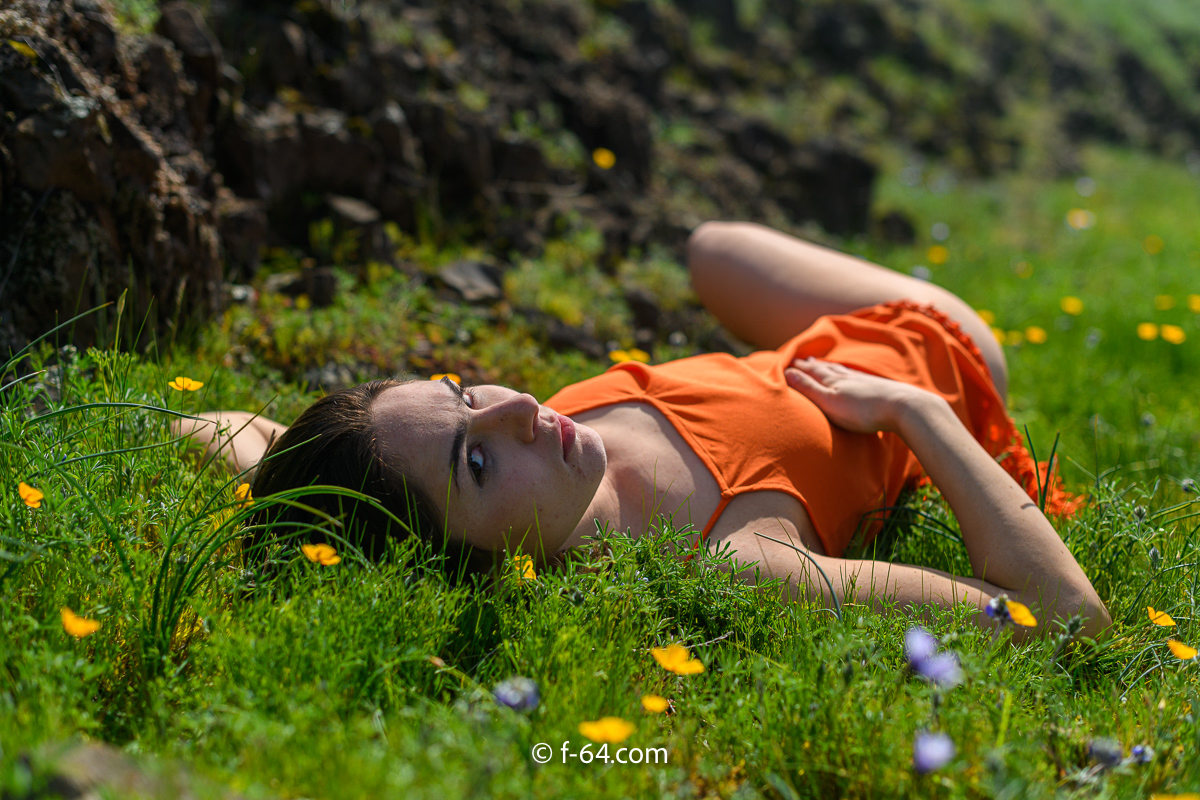
We started shooting at 4:30 PM and the golden hour light came in around 5:15. When the sun dropped to about 15 degrees above the horizon, it lit the flowers from the side and turned the poppies translucent. Orange petals with sunlight passing through them glow like stained glass. I shot three rolls of film in those 45 minutes. The light was changing so fast that I was adjusting exposure every few frames, but the Nikkormat’s match-needle meter kept up.
The best frame of the day came at about 5:40 PM. She was lying in the lupines, eyes closed, arms stretched out, and the light was coming in at such a low angle that it caught individual flower stems and turned them into bright lines around her. On Portra, the whole image has this golden, hazy quality. It looks like a memory of something rather than a photograph of something.
Nature as the Set
I keep coming back to outdoor boudoir photography because nature does the production design for free, and it does it better than I could. A field of wildflowers in Oroville during peak bloom is more beautiful than any backdrop I could build or rent. The colors are real. The light is real. The wind moving through the flowers is real. And that realness comes through in the images.
You can see more work like this in my natural light gallery, or read about how I plan these sessions on the experience page.
See more from this session in the natural light gallery.
Bloom Season is Short
If a wildflower boudoir session sounds like your kind of thing, the window is small. I watch the bloom reports starting in February and plan these sessions on short notice, usually a week or less. Flexibility with dates is a must. But if you can make it work, shooting in a field at golden hour during peak bloom is one of those experiences that sticks with you.
Get in touch and I’ll add you to the list for next season.